
Mentoring, revisited
Mentoring, Revisited
By Aliya Bhatia
Last Monday after volunteering at the King Center, I foundmyself wandering around its exhibits. A few of the pieces reminded me of one ofmy former students, Brianna, whose artwork ranges from paintings of the fourgirls killed in the Birmingham Church Bombing to self-portraits interrogatingwhat it means that her skin is lighter than that of her parents and herfriends. There must have been a little telepathy in the works, because I soonreceived a long string of texts from Brianna about her new job. I found aquieter hallway and gave her a call, and we caught up about everything fromwork to hobbies to her ideas of how to narrate black history through ballet.

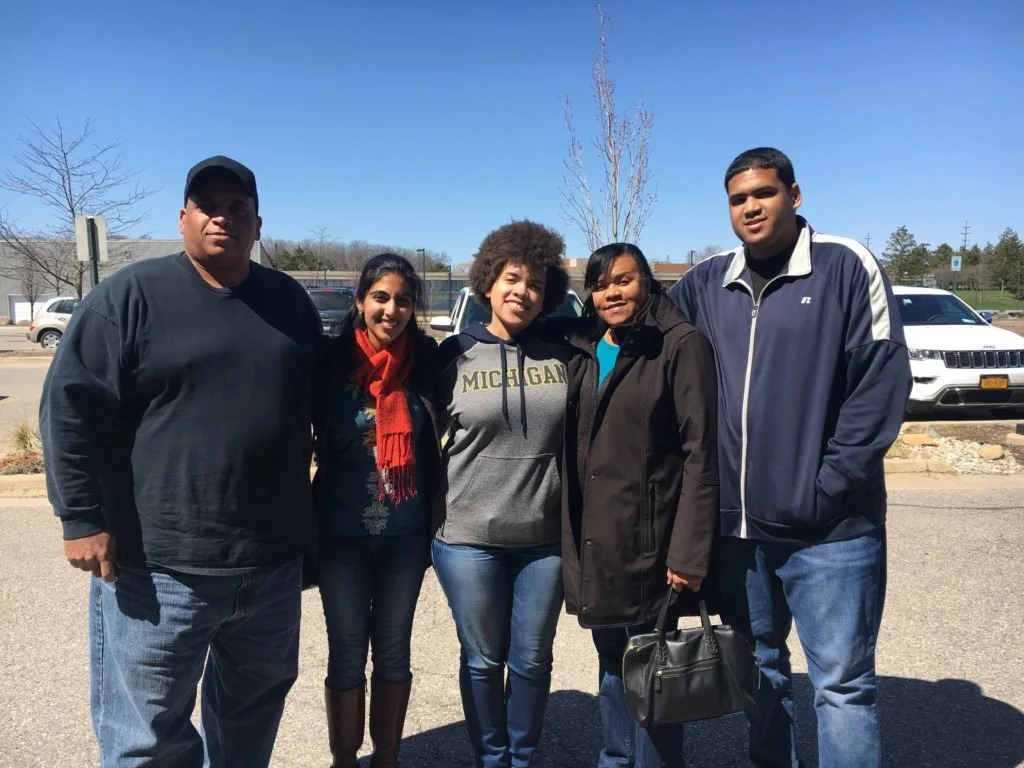
I taught Brianna 11th grade math a number ofyears ago. Of my many students, I kept most closely in touch with just a few –sometimes they mentor me and sometimes I mentor them. On occasion, I get toexperience huge milestones in their lives, such as when I visited Briannaduring her graduation from the University of Michigan last summer.
When I joined Big Brothers Big Sisters of Metro Atlanta, Icame in with this more colloquial notion of mentorship. I am fortunate to havemany mentors who have given me invaluable skills and experiences, and I wantedmore children in Atlanta to have this same resource.
I soon realized that in the context of a formal mentoringprogram like Big Brothers Big Sisters, there are a couple importantdistinctions. These differences come from countless studies on mentoringprograms, volunteering, and youth development. We apply these concepts to ourwork of matching “Bigs” or mentors with “Littles” or mentees. Drawn from theNational Mentoring Partnership’s Elementsof Effective Practice for Mentoring, these aspects of our program aremarkers of quality in the mentorship space and associated with mentorship’spositive outcomes:
- Trainingvolunteer mentors is critical: I was trained as a teacher, which laterprecipitated my friendship with Brianna. It is similarly essential forvolunteer mentors to receive training on working with young people, on childsafety, and on building strong relationships with the child and family. Volunteersinterested in Big Brothers Big Sisters’ Community-Based program spend fourhours in various forms of training to prepare for their match. Our trainingprovides clear definitions of what a mentor is and isn’t and looks at commonsituations that Bigs may face when working with Littles who face poverty orother types of adversity. Our training also addresses child safety – in orderto do good for our Littles, first our Bigs must do no harm.
- The matchshould be strong enough to last at least a year: Brianna and I had a fullschool year to get to know one another – and, Brianna was nearly an adult,allowing her to have some say in our lasting friendship beyond the school year.We have now been in touch over 7 years. The research shows that mentoringrelationships that last less than a year can do more harm than good to a child.To help ensure long-lasting matches, we try to match Bigs and Littles who livenear one another and we also involve the parent in the process of choosing ourBigs. While this means that not every volunteer who walks through our door willget matched, it also helps us ensure that the Big, Little, and family willclick in a way that sustains their relationship and trust from the start. Whilewe partner closely with both Littles and Bigs, our program exists to supportkids facing adversity, and we should put our Littles first in every decision wemake.
- Ongoingsupport improves outcomes: While Brianna and I have kept up on our own, Ihave sometimes wondered whether the advice I have given was the right advice atthe right time. Fortunately, our Bigs in our program have a resource to turn toin order to navigate their journey with their Little – a Match Support Specialistwho supports their relationship on a monthly or quarterly basis. The researchshows ongoing support leads matches to meet more frequently and that suggestionsof low-cost, age-appropriate events help matches to last longer. Furthermore,we know that an abrupt and unexplained end to a mentoring relationship can leada child to believe that an adult has given up on them and is walking out oftheir life – and the child may even blame themselves for what they may feel istheir own failure. Big Brothers Big Sisters’ practice of facilitating a matchfrom start to finish ensures that the closure of that match is donethoughtfully without harming the child’s self-esteem.
These are just a few of many research-driven best practicesthat ground the Big Brothers Big Sisters program and other quality mentorshipefforts. While the space must continue to innovate and experiment, it shouldalso be built on the bedrock of our existing knowledge of youth development andsafety, much of which is already established.
A few weeks ago, I attended a joint MENTOR and Big BrothersBig Sisters career panel and met Abigail and Tracy. They have been matched withBig Brothers Big Sisters for over 10 years. As a result of their close andsustained friendship, Tracy is teaching Abigail yoga – a practice I personally didnot get a chance to experience until my late 20s. Their presence at the eventalso shows how Tracy was focused on supporting Abigail in her college andcareer ambitions. Their friendship is a demonstration of how the variouspillars of effective mentorship can create relationships that change a child’slife for the better, forever.
As for Brianna, I will continue to ride her coattails as shebrings her combined creative brain and business sensibilities to her work. I amfortunate to have so many incredible and diverse friendships in my life and amlucky that my full-time job is to extend that joy to families and mentorsacross our metro region.